
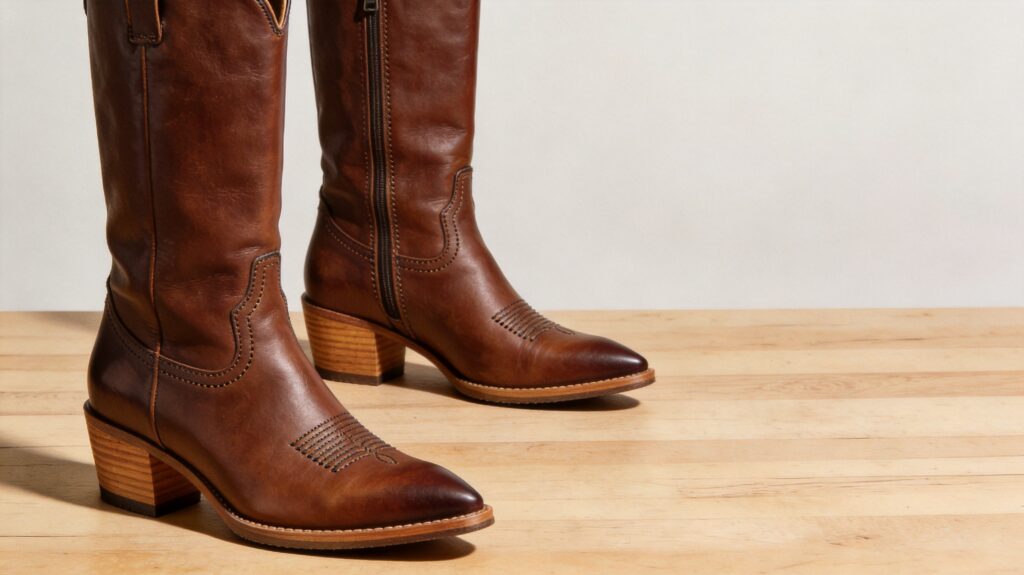
Women Leather Tall Boots Wholesale: B2B Sourcing Guide
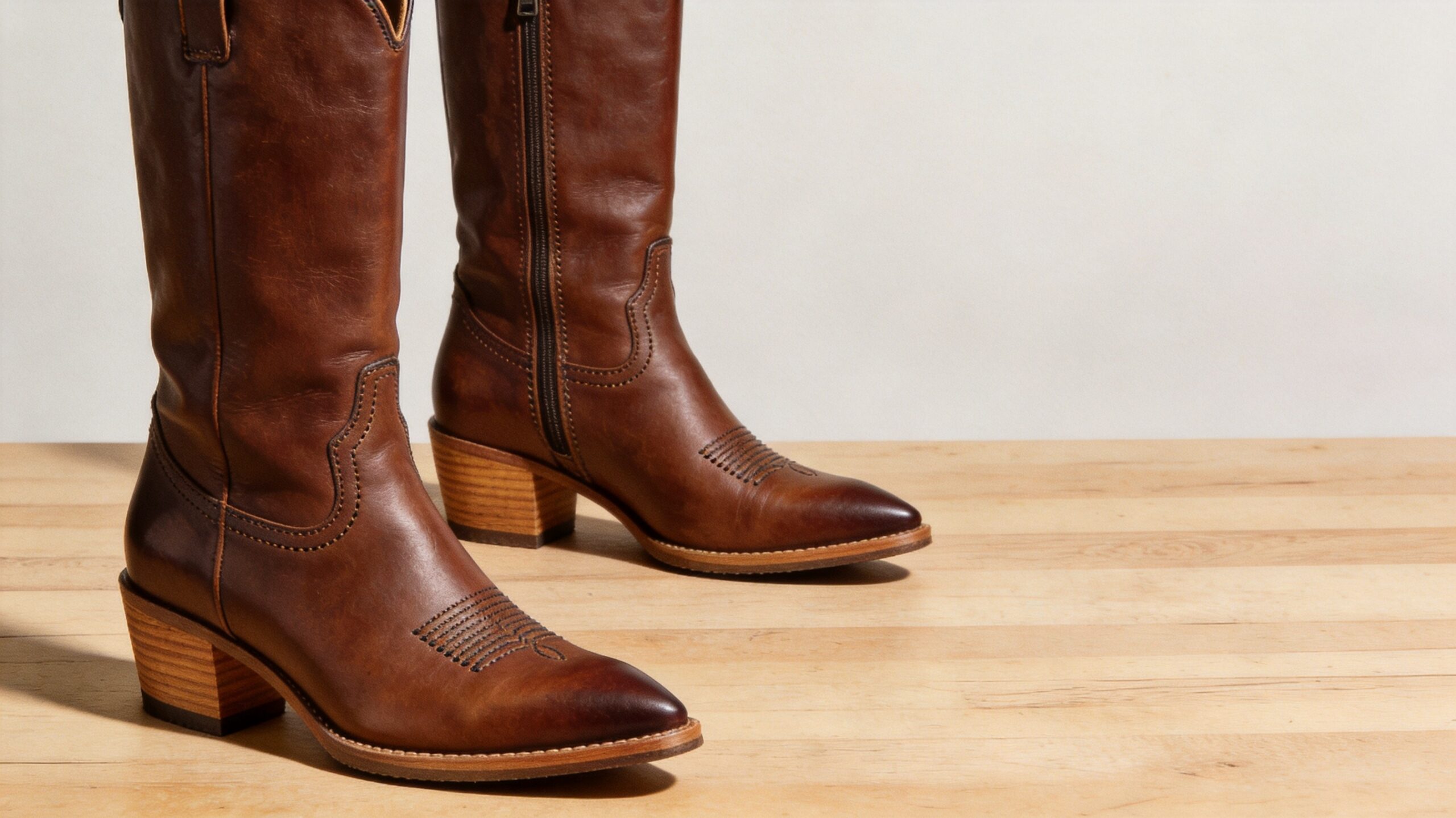
The Western footwear segment has experienced a remarkable resurgence in recent years, with tall leather boots emerging as a staple in both fashion-forward urban wardrobes and traditional ranch settings. For B2B buyers—whether you operate a boutique, an online retail platform, or a multi-location western wear chain—securing a reliable source of women leather tall boots wholesale is essential to capturing this growing demand.
This guide provides a comprehensive roadmap for sourcing, evaluating, and partnering with suppliers to build a profitable inventory of women’s western cowboy boots. If you’re new to this category, our beginner’s guide to choosing tall boots for women offers valuable insights into style variations and fit considerations that will inform your buying decisions.
1. Why the Women’s Western Tall Boot Market Is Growing
Rising Demand for Women’s Western Cowboy Boots in Retail
The once-niche category of western footwear has gone mainstream. Major fashion houses, celebrity endorsements, and social media influencers have propelled women’s western cowboy boots into the spotlight. Retailers report consistent year-over-year growth in tall boot sales, driven by their versatility—these boots pair equally well with dresses, denim, and office attire. For wholesale buyers, this translates into a product category with proven sell-through rates and minimal markdown risk.
Key Consumer Trends Driving Tall Boot Sales
Several trends are fueling this momentum. First, the “cowboy core” aesthetic continues to dominate fashion cycles. Second, consumers increasingly prioritize durability and craftsmanship, making genuine leather tall boots a preferred investment over fast-fashion alternatives. Third, the rise of western-inspired festivals and country music events has created seasonal spikes that savvy retailers can capitalize on.
Profit Margins and Reorder Potential for Wholesale Buyers
Tall leather boots typically carry higher average selling prices than ankle boots or shoes, resulting in attractive per-unit margins. Moreover, because western boots are often considered wardrobe staples, reorder rates are strong. A well-chosen tall boot style can become a repeat bestseller, providing predictable revenue streams for wholesale distributors.
2. Defining Your Wholesale Product Specifications
Leather Types: Full-Grain, Top-Grain, and Vegan Alternatives
The leather you choose determines both cost and customer satisfaction. Full-grain leather offers the highest durability and develops a desirable patina over time—ideal for premium positioning. Top-grain leather is slightly more processed, offering a smoother finish at a lower price point. For budget-conscious buyers or those targeting vegan consumers, high-quality synthetic alternatives have improved significantly and can be a strategic addition to your catalog.
Shaft Height, Heel Styles, and Toe Shapes for Western Appeal
Western tall boots typically feature shaft heights ranging from 12 to 18 inches. Classic heel options include the stockman heel (1.5 inches), the roper heel (1 inch), and the taller walking heel (2 inches). Toe shapes—pointed, snip, square, or round—define the boot’s silhouette and regional appeal. For broad market reach, offer a mix of traditional and contemporary designs. Our vintage-style embroidered western cowboy boots exemplify how classic pointed-toe silhouettes with mid-heel heights appeal to modern consumers seeking authentic western aesthetics.
Sizing Runs, Width Options, and Customization Capabilities
Women’s western boots generally run in US sizes 5–11, with some suppliers offering half sizes and wide widths. Discuss customization capabilities early: can the factory accommodate custom shaft embroidery, exotic leathers, or branded hardware? These options can differentiate your offering and justify premium pricing.
3. Evaluating Women Leather Tall Boots Wholesale Suppliers
Factory vs. Trading Company: Pros and Cons for B2B Buyers
Working directly with a factory offers lower costs, greater control over production, and direct communication. However, factories often require higher minimums. Trading companies, by contrast, offer flexibility, smaller MOQs, and access to multiple factories—but at a higher unit cost. Assess your volume and risk tolerance before choosing your sourcing channel. Reviewing our product catalog can give you a sense of the range and quality standards a direct manufacturer can deliver.
Quality Control Checks: Stitching, Sole Attachment, and Finish
Before committing to a supplier, request pre-production samples and evaluate them rigorously. Inspect stitching for uniformity, check sole attachment for durability (welted vs. cemented), and assess the finish for scratches or color inconsistencies. A reputable supplier should welcome third-party inspections.
Minimum Order Quantities (MOQs) and Lead Time Expectations
MOQs vary widely—from 50 pairs for trading companies to 300+ pairs for direct factory orders. Lead times typically range from 30 to 90 days depending on customization. Clarify these parameters upfront to align with your inventory planning.
4. Comparing Domestic vs. Overseas Sourcing Options
Cost Differences Between US, Mexican, and Asian Manufacturers
US-based manufacturers offer faster shipping and easier communication but command higher labor costs. Mexican factories, particularly in León, produce excellent western boots at moderate prices. Asian manufacturers—especially in China and Vietnam—offer the lowest unit costs but require longer lead times and more rigorous quality oversight. For a deeper look at how overseas manufacturing can deliver competitive pricing without sacrificing quality, consult this industry reference on global footwear production standards.
Shipping, Duties, and Compliance for Western Boot Imports
Importing from overseas involves freight costs, customs duties (typically 8.5–20% for footwear), and compliance with labeling and safety regulations. Factor these into your landed cost calculations. Consider using a customs broker to navigate documentation and avoid delays.
Communication, Sampling, and After-Sales Support Considerations
Language barriers and time zone differences can complicate communication. Choose suppliers with English-speaking sales teams and responsive after-sales support. Request multiple rounds of samples before mass production to minimize costly errors.
5. How to Negotiate Bulk Pricing and Payment Terms
Volume Discount Tiers and Seasonal Order Strategies
Suppliers often offer tiered pricing—e.g., 5% off for 200 pairs, 10% off for 500 pairs. Plan your orders around seasonal peaks (spring and fall) to secure better rates. Committing to annual volumes can also unlock preferential pricing.
Payment Terms: Letter of Credit, T/T, and Escrow Options
Common payment methods include Telegraphic Transfer (T/T), Letters of Credit (L/C), and escrow services. T/T is standard but carries risk; L/C offers security for large orders. Escrow services provide a middle ground for new partnerships. Never pay 100% upfront—negotiate a 30/70 split (deposit before production, balance before shipment).
Protecting Your Margin with Clear Contract Clauses
Your contract should specify quality standards, delivery dates, penalty clauses for late shipments, and dispute resolution mechanisms. Include provisions for defective goods replacement and clear return policies.
6. Building a Reliable Supply Chain for Tall Cowboy Boots
Managing Inventory for Fast-Moving Sizes and Styles
Analyze sales data to identify your best-selling sizes and colors. Maintain deeper stock on these SKUs while keeping slower-moving variants at lower levels. Implement a reorder point system to automate replenishment.
Quality Assurance Protocols for Incoming Wholesale Batches
Conduct random inspections on every incoming batch. Check for consistent sizing, leather quality, and construction integrity. Document defects and share feedback with suppliers to drive continuous improvement.
Backup Supplier Strategies to Avoid Stockouts
Relying on a single supplier is risky. Develop relationships with at least one backup source—ideally in a different country—to mitigate disruptions from geopolitical issues, raw material shortages, or factory closures.
7. Marketing Your Women’s Western Cowboy Boots to Retailers
Creating a B2B Catalog with Specs and Lifestyle Imagery
Your catalog should include detailed specifications (leather type, shaft height, heel measurement), high-resolution lifestyle imagery, and clear pricing tiers. Digital catalogs with lookbooks are essential for modern B2B buyers.
Targeting Boutiques, Online Stores, and Western Wear Chains
Segment your outreach: independent boutiques value exclusivity and personalized service; online stores prioritize SEO-friendly product data; large chains require volume pricing and reliable logistics. Tailor your pitch accordingly.
Leveraging Trade Shows and Digital Channels for Buyer Leads
Attend major trade shows like the Western & English Sales Association (WESA) or Magic Marketplace. Simultaneously, build a strong digital presence with SEO-optimized landing pages targeting keywords like “women’s western cowboy boots supplier” and “women leather tall boots wholesale.” Our western-style plus-size mid-calf boots collection demonstrates how targeted product pages can attract qualified buyer traffic.
8. Frequently Asked Questions for Wholesale Boot Buyers
What Is the Typical MOQ for Women Leather Tall Boots?
MOQs range from 50 pairs (trading companies) to 300+ pairs (direct factories). Some suppliers offer lower MOQs for mixed styles, so always ask.
How Long Does a Custom Western Boot Order Take?
Standard production takes 30–60 days. Custom orders with unique leathers, embroidery, or hardware can take 90–120 days, including sampling time.
Can I Request Mixed Styles Within One Wholesale Order?
Yes, most suppliers allow mixed styles and colors within a single order, though there may be a small surcharge for additional SKUs. This is an excellent way to test new designs with minimal risk.
Sourcing women leather tall boots wholesale requires careful planning, rigorous supplier evaluation, and strategic negotiation. By following this guide, you can build a profitable, resilient supply chain that positions your business as a leading women’s western cowboy boots supplier in today’s competitive market. For more insights on sourcing and industry trends, explore our industry news category or reach out to our team through our contact page for partnership inquiries.
Women leather tall boots wholesale demand continues to rise, and partnering with the right supplier ensures your inventory meets customer expectations. Whether you’re expanding an existing line or launching a new collection, prioritizing quality and reliability in women leather tall boots wholesale will drive long-term success. Keep these sourcing principles in mind as you scale your business and refine your women leather tall boots wholesale strategy.